The timeless beauty
of Travertine
Some history first
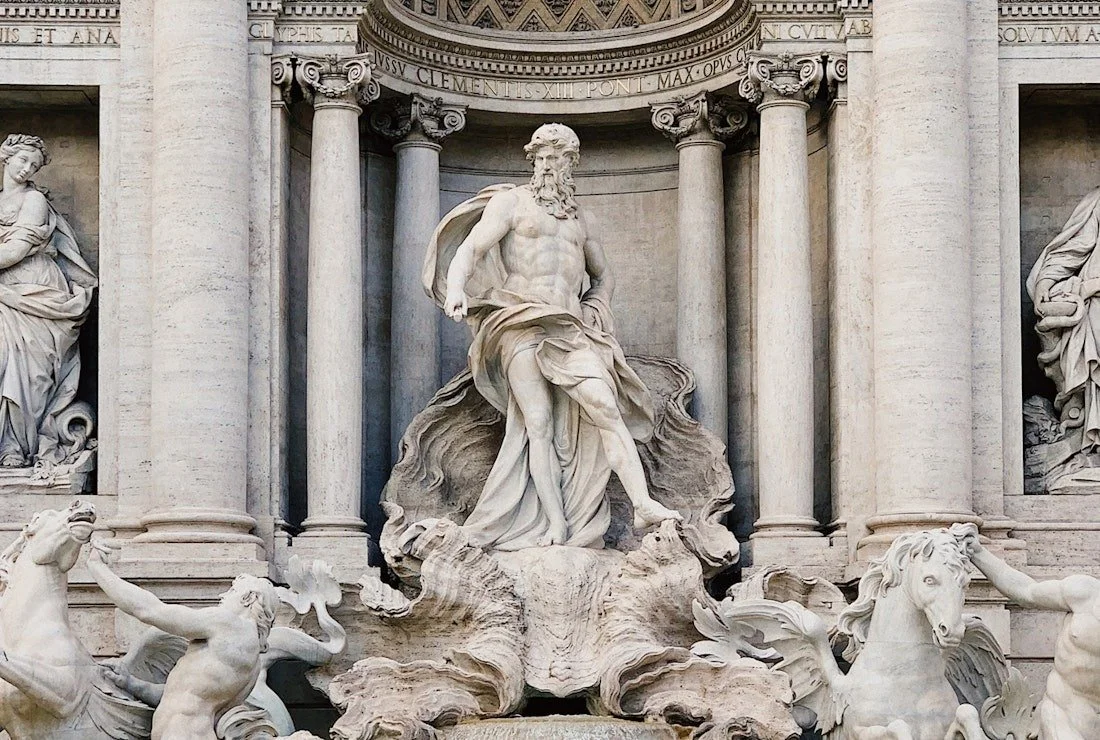
The word ‘travertine’ is a derivation of the Latin tiburtinus meaning ‘of Tibur’ which is the original name of Tivoli, in the outskirts of Rome. The ancient Romans called travertine Lapis Tiburtinus, or ‘the stone from Tivoli’.
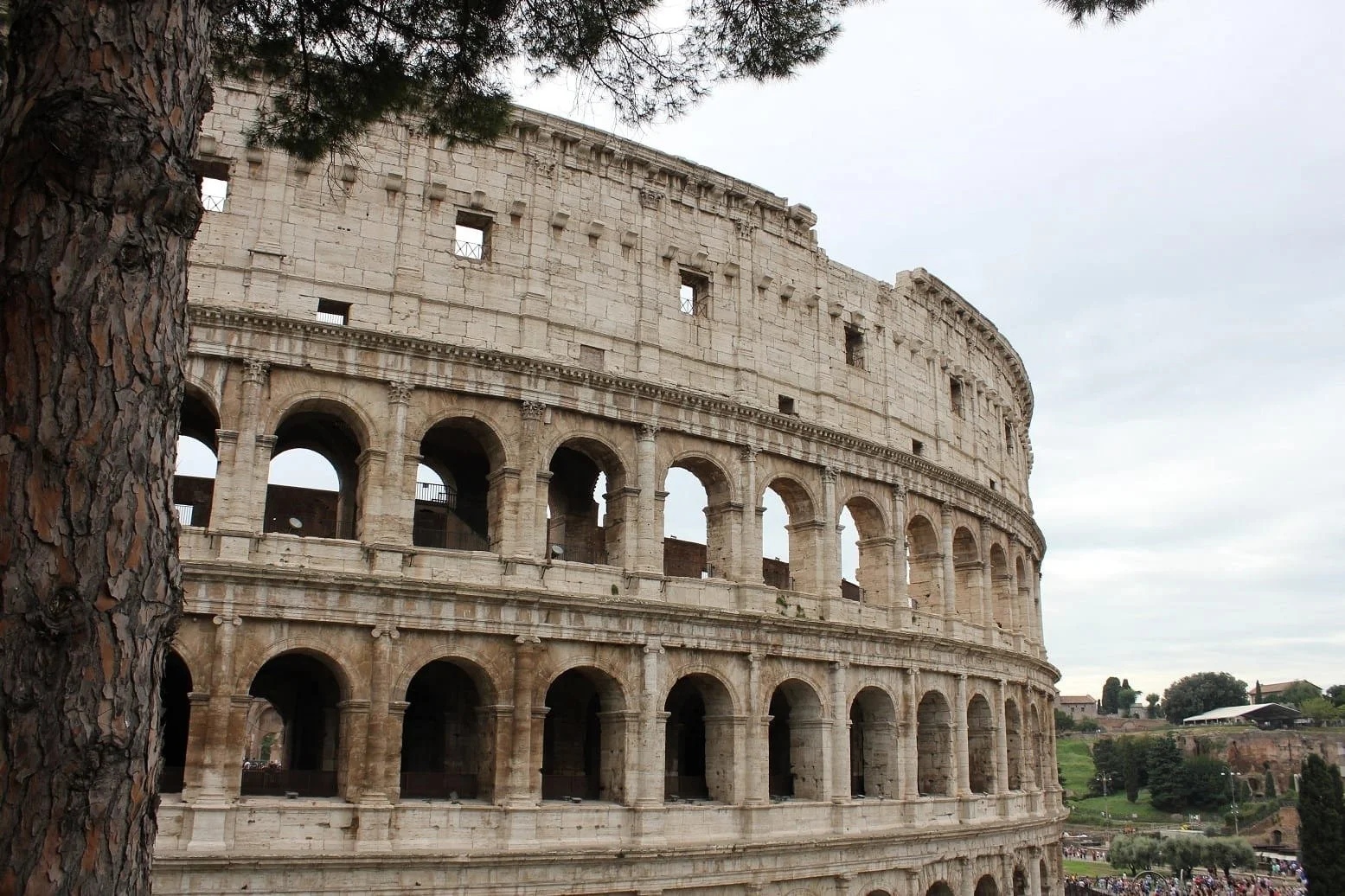
The Romans were the first to recognise the durability of the stone and began mining it as far back as 75 BC, during Julius Caesar’s reign. Travertine became a prime building material for important Roman monuments such as the Colosseum, the Trevi Fountain and St. Peter’s Basilica.
Italy had a near-monopoly on the production and global supply of travertine until the 1980s. Since then, travertine has been mined in various locations around the world. Turkey has now overtaken Italy as the largest producer and exporter of the stone.
Unique by nature
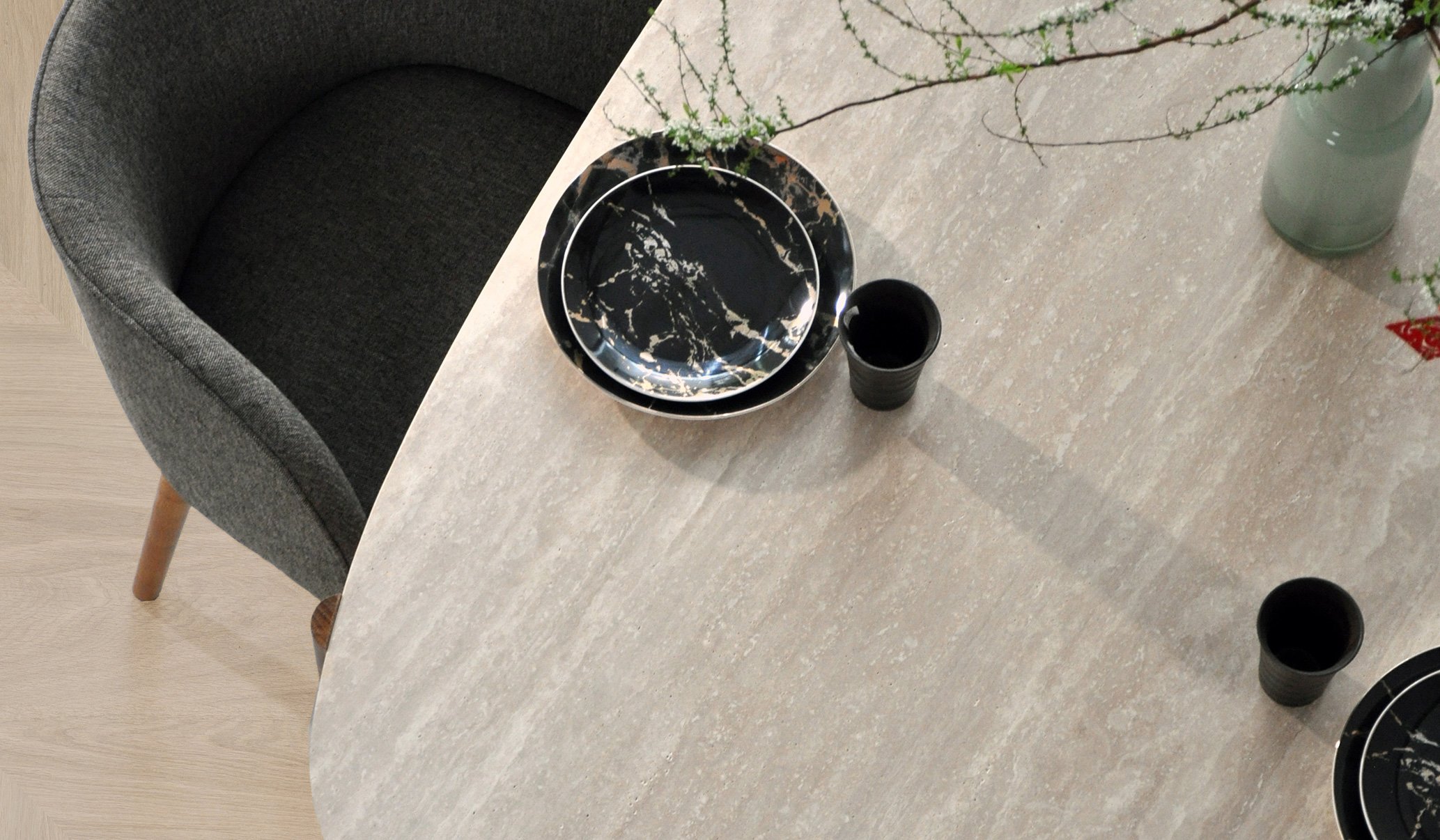
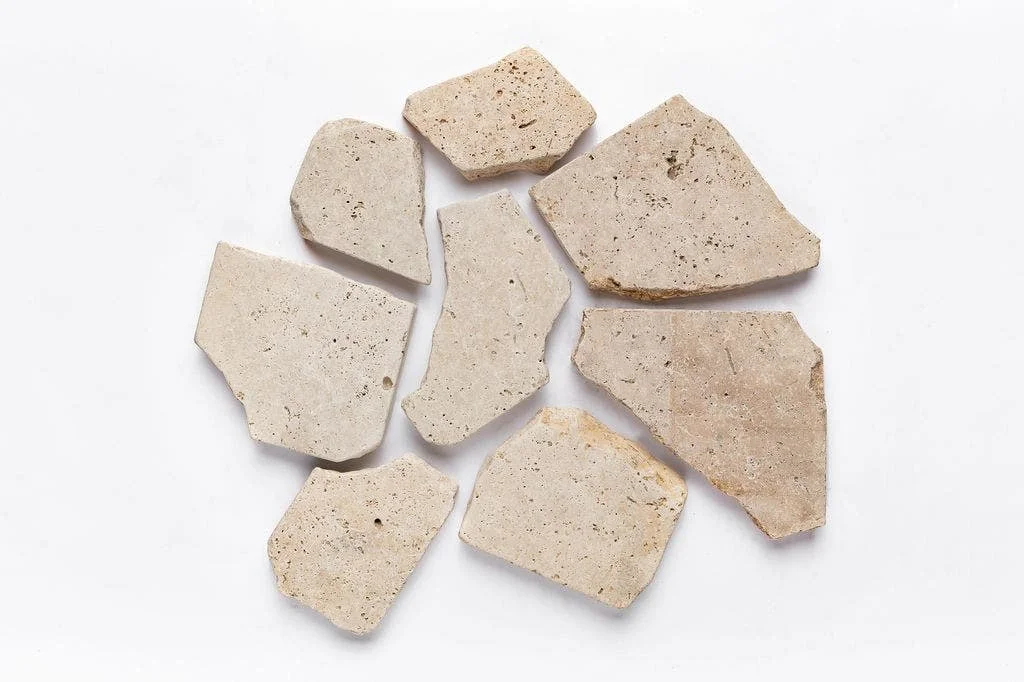
Travertine is a natural stone that forms when mineral-rich water seeps through sedimentary rocks, leaving behind deposits that harden over time—which makes it a type of limestone. This geologic process formed by the evaporation of mineral-rich rivers, lakes or spring water gives travertine its stunning pitted texture that makes this material so unique and organically textured.
Travertine In your interior
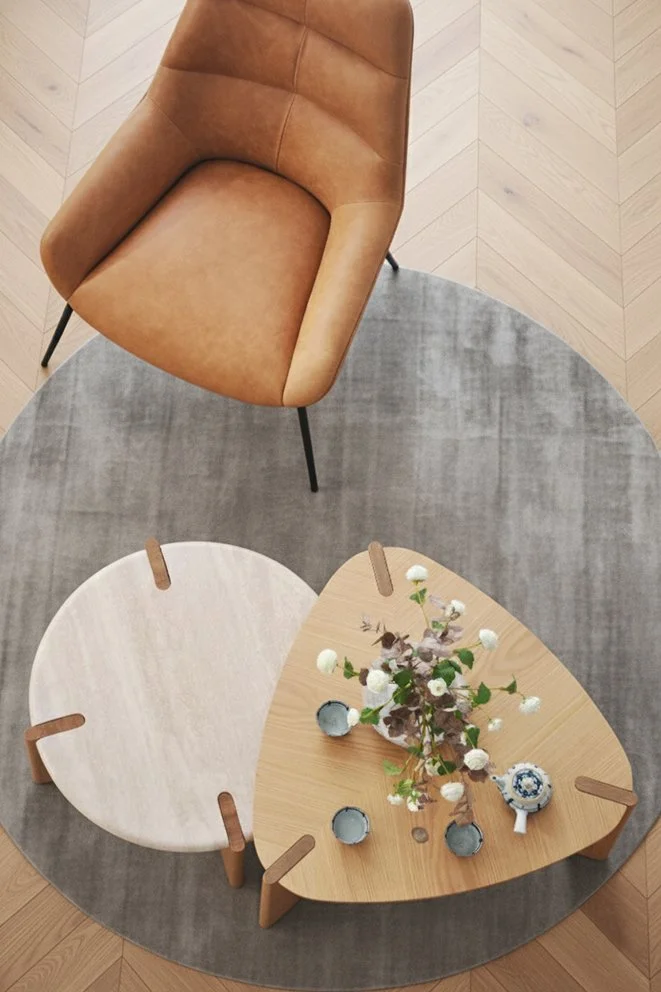
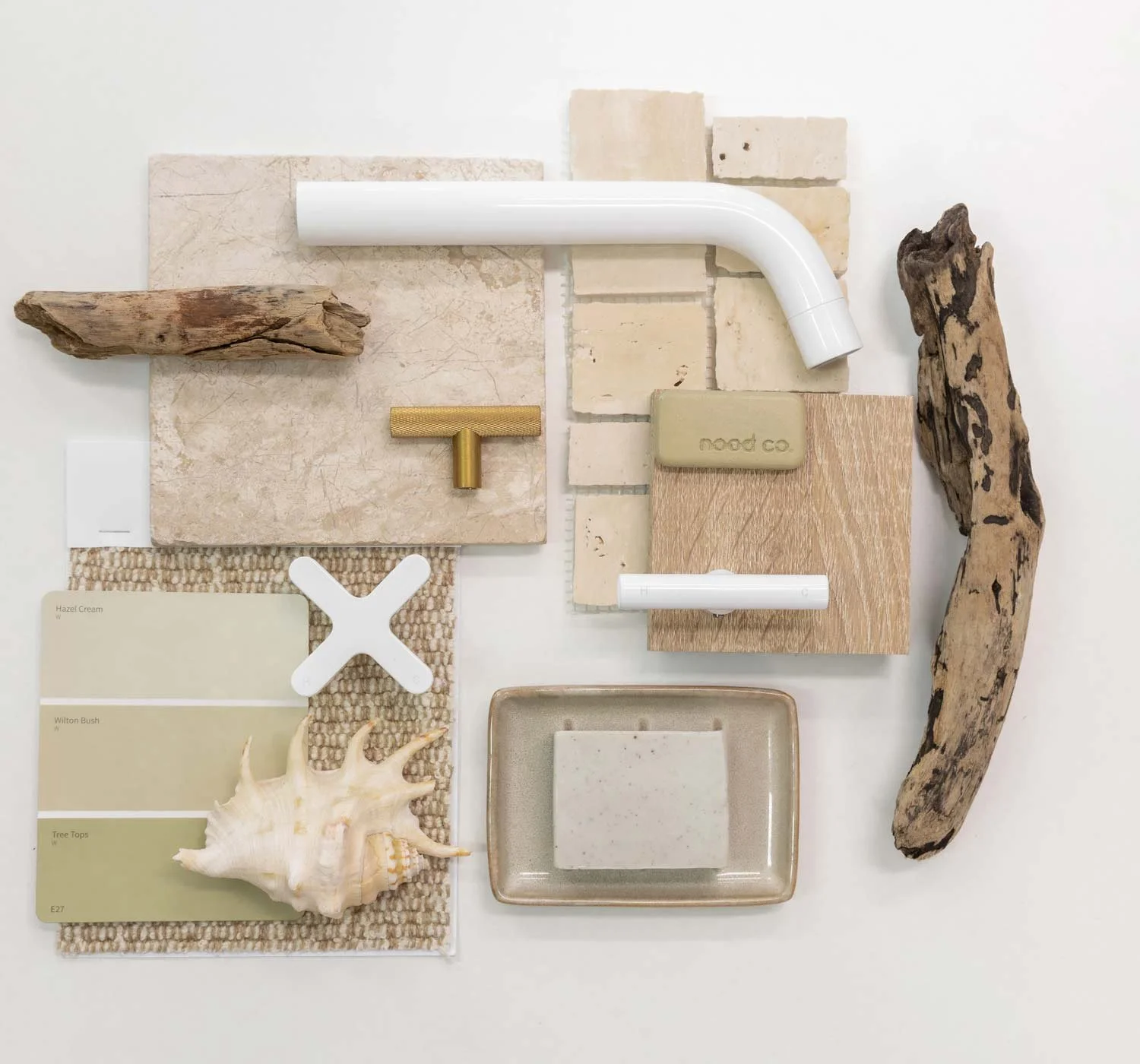
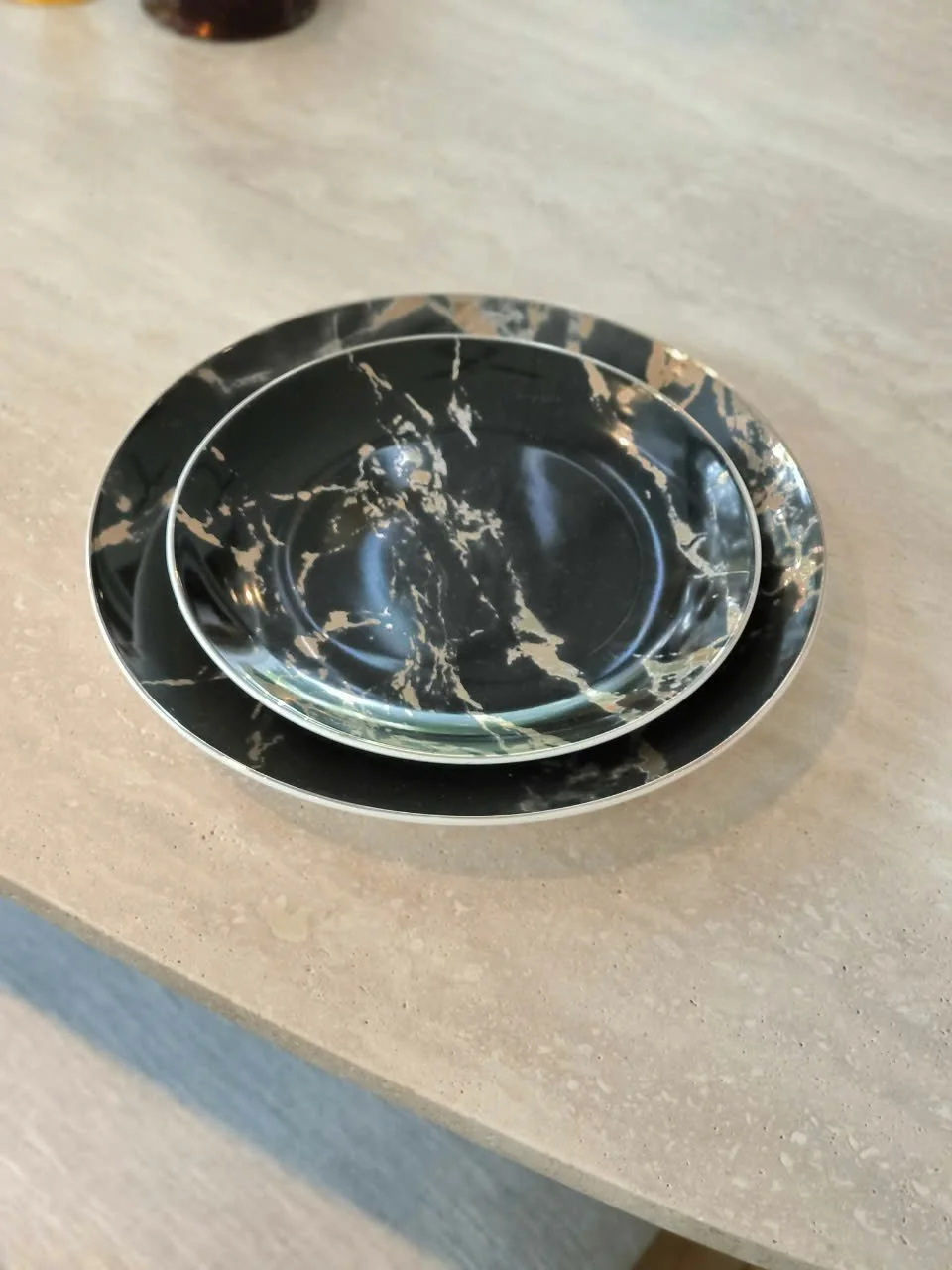
Travertine has a natural feel, and is very popular among Designers who seek an organic yet modern and minimalist style. The so called “Japandi” style. For your interior decoration, it will blend perfectly with other organic materials such as driftwood, ceramic, rattan, wool etc. You can also bring a touch of luxury with a few brass accents and a splash of black, but don’t overdo it or you will loose the natural beauty of this amazing material!
Travertine Pros and cons
Like all types of natural stone, travertine has perks and downsides. Below, we've outlined some of this pretty material's pros as well as the less desirable features you should know about before you go all in
Pros
The classic-modern feel: You simply can't beat the charm of natural stone. While many types of stones can mimic the look of travertine, none come close to its beautiful patina or rustic appeal.
It also gives a High-End feel to a space without the ostentatious look of other marble stones or Quartz.
Travertine is also very durable: It can hold its own against heavy foot traffic and rarely cracks or chips.
Cons
Travertine is porous, so like marble and granite it's susceptible to etching and staining. When in contact with substances like citrus juices, sauces, or vinegar, you should apply stone sealant upon installation and periodically going forward.
The trick: Many homeowners seal their Travertine tops with epoxy. If you don't, water can get into the holes and weaken the stone.
Care instructions
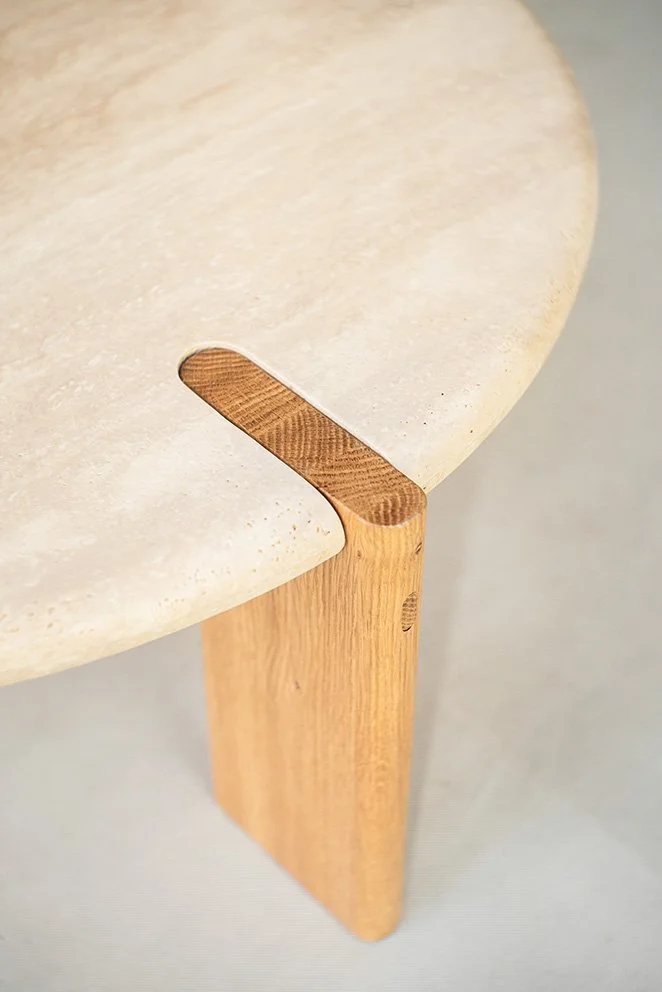
Do not put hot objects on the surface.
Dust with a soft, dry cloth and clean with a slightly damp cloth.
Do not use abrasive cleaners.
Avoid placing rough or sharp objects on the surface.
Use coasters or placemats and trivets where possible, to prevent discoloration of the surface.
Keep furniture away from direct heat or sunlight.
Lift when moving, do not drag
Travertine is a porous stone so remember to wipe spills immediately.
Acidic foods and liquids will stain and etch the marble surface quickly. In case of accidental spills, soak up with a dry soft absorbent cloth immediately. Additional cleaning with a damp cloth may be needed. Buff dry.
Finishes
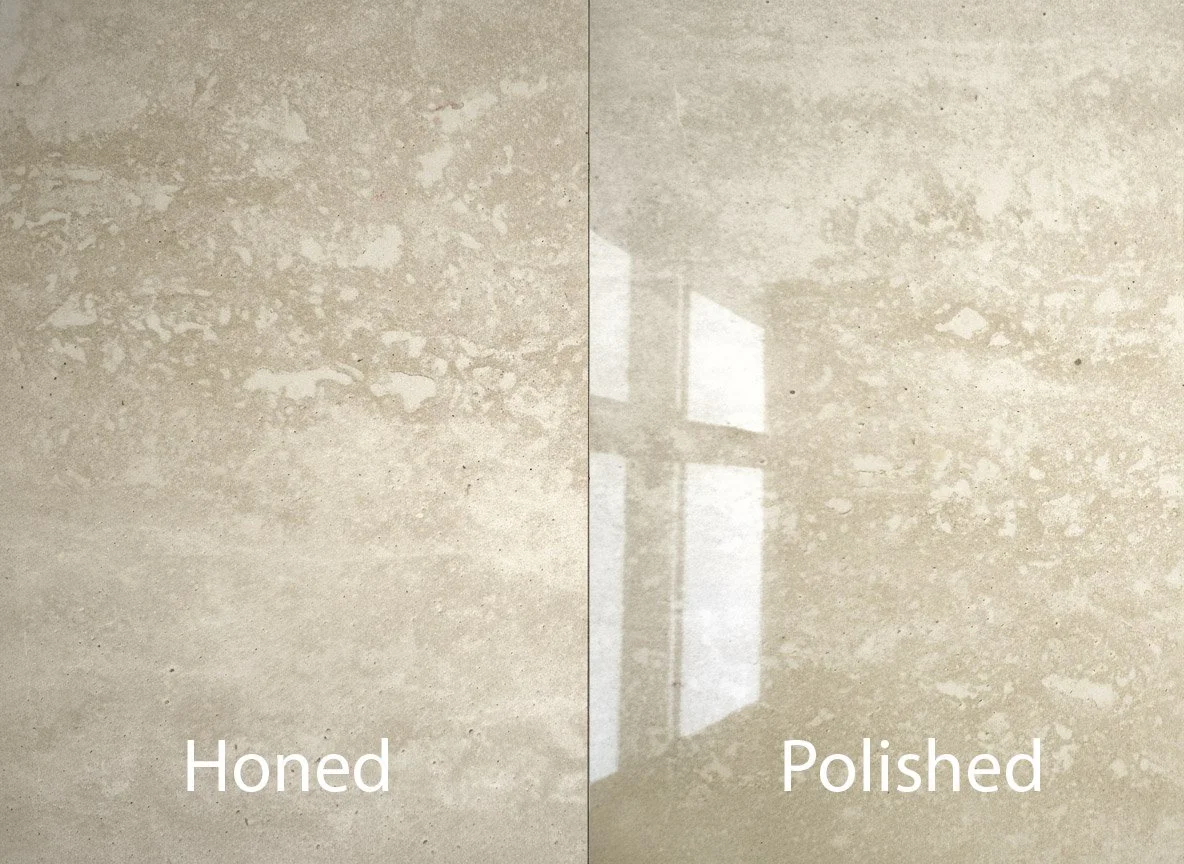
Features
Smooth, flat, and matte surface with no reflective shine. It is the most common and versatile choice for travertine furniture.
Best for:
Versatile use: Its subdued elegance allows it to blend seamlessly with various decor styles.
Natural look: A honed finish will suit better a scandinavian interior with a focus on organic design and naturality.
Cons:
Maintenance: Unfilled honed travertine, while naturally attractive, has an uneven texture and is more difficult to clean.
Like all travertine, it is susceptible to etching from acidic liquids.
Features
High-gloss, mirror-like sheen. The pores of the travertine are almost always filled for a polished finish.
Best for:
Statement pieces: A polished surface can turn a table into a high-end, luxurious focal point for a living or dining room.
Enhanced aesthetics: The gloss finish adds a vibrant and reflective quality.
Cons:
Surface imperfections: It is more prone to visible scratches and requires regular sealing and maintenance to protect its shine.
Filled or natural?
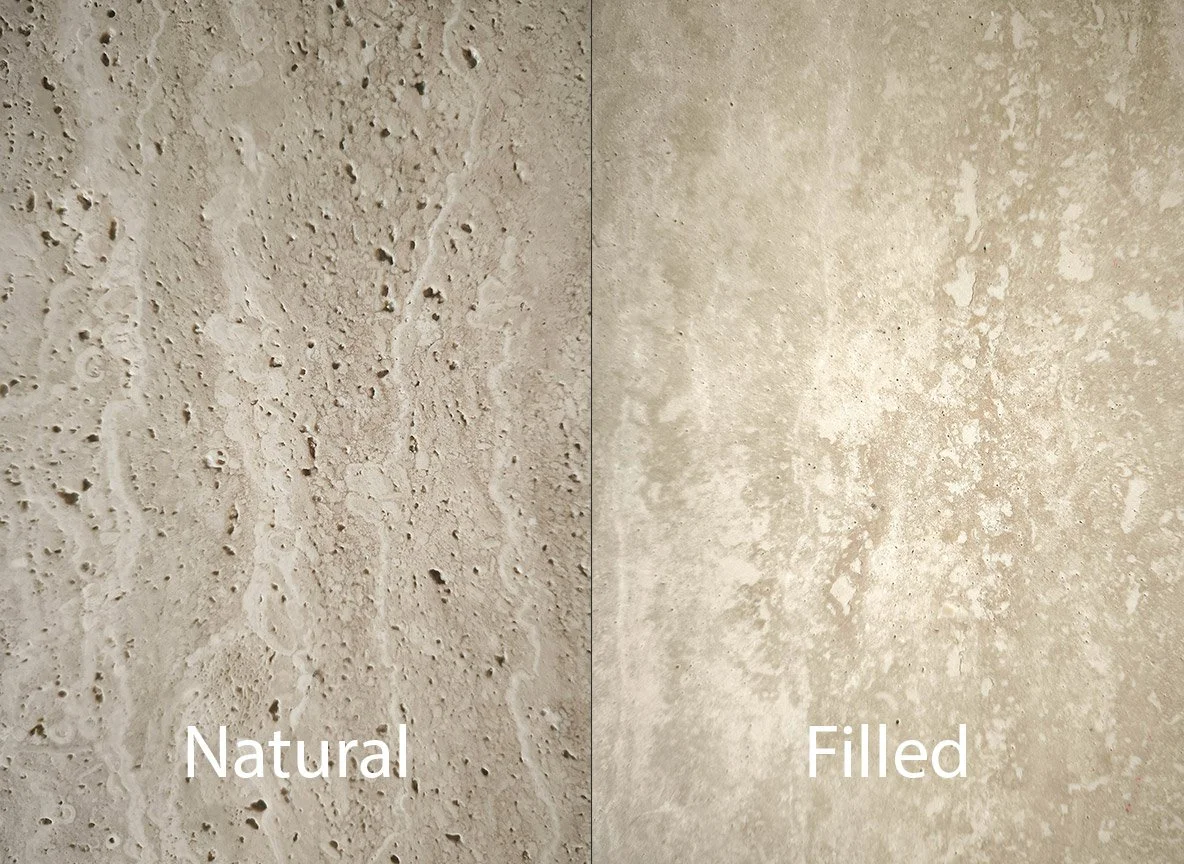
The raw travertine is always porous.
Like a “brushed” or “tumbled” stone, its surface has a naturally rustic and textured look, with lots of holes on it. While some people may like the authenticity of natural travertine, others prefer a smooth, filled, and sealed surface that’s easier to clean than a porous one.
That’s why we offer to fill-in the holes with a natural grout to protect your table tops from stain, water and dirt on request.
Our products in travertine
Scroll down to discover our products in Travertine as we explore this incredible material, and contact us for price inquiries!
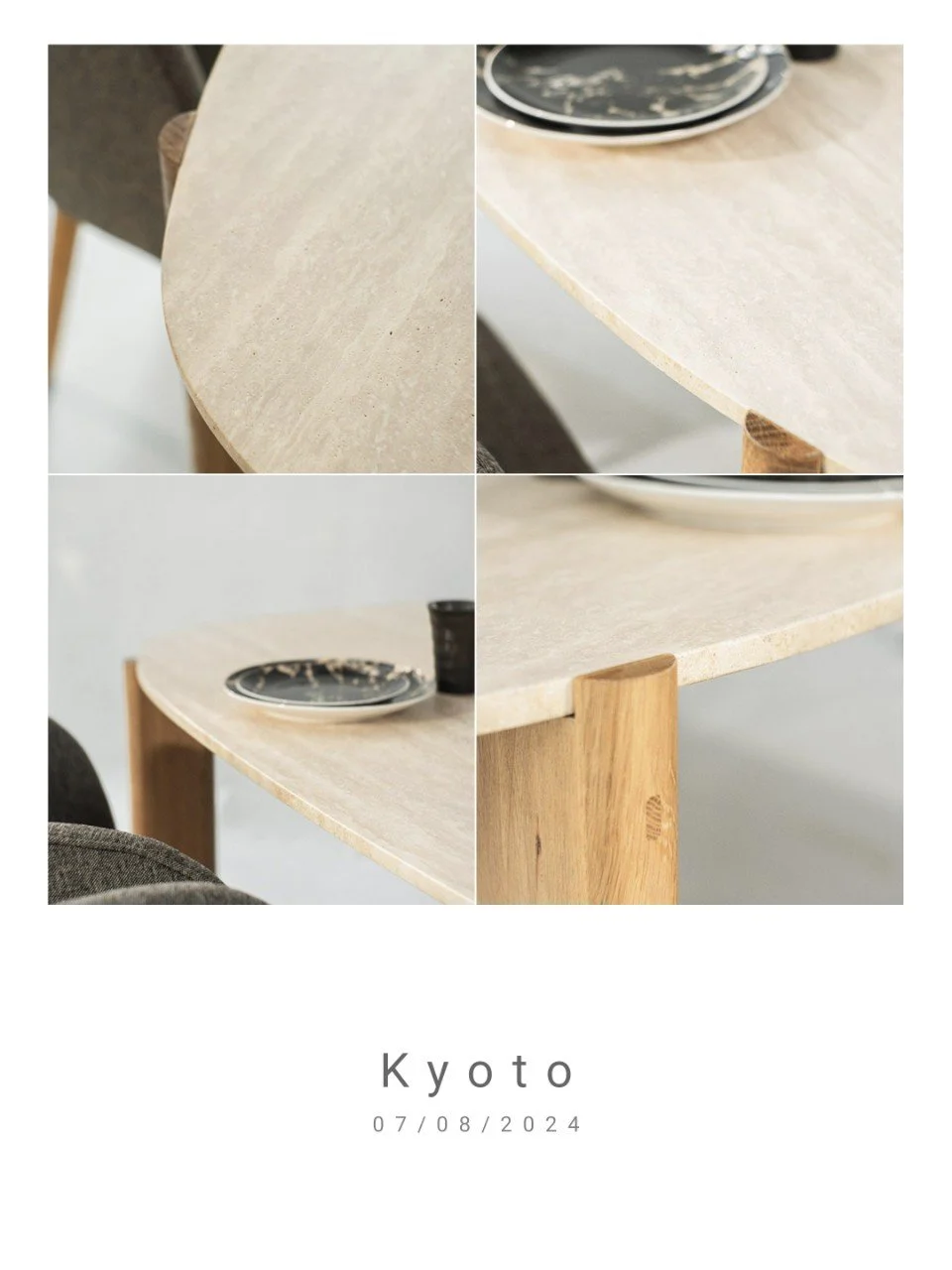
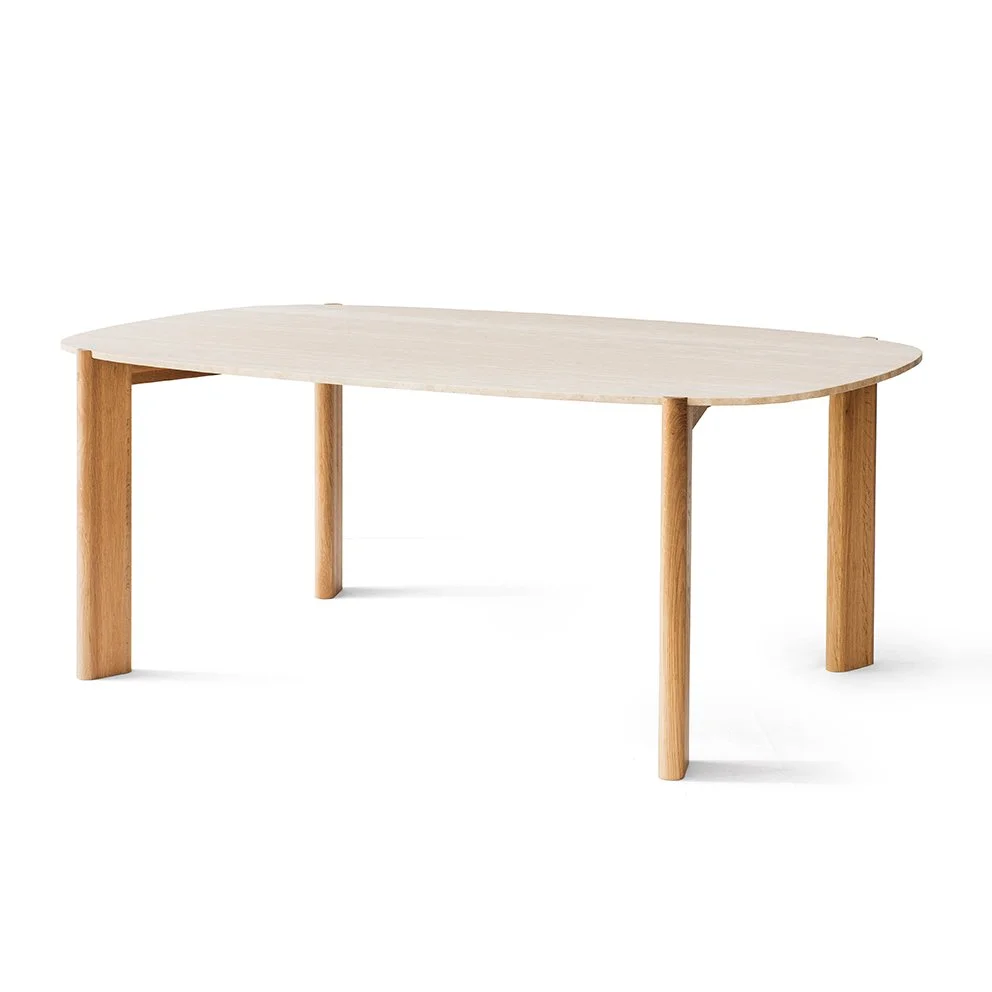
Description:
White Oak frame and legs. Top in natural Travertine with optional sealant for a smooth surface. Powder-coated steel brackets.
Size:
190x100x75cm
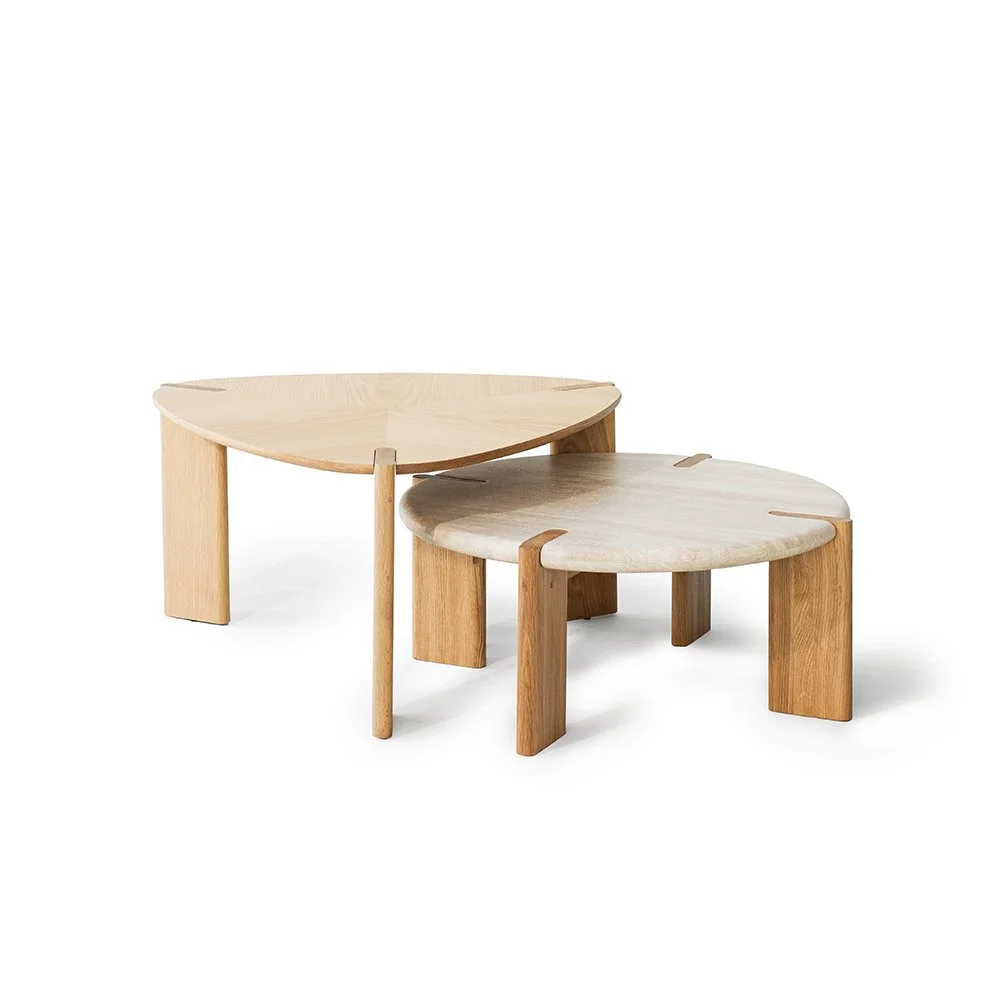
Description:
White Oak frame and legs. Oak veneer marquetry.
Accent table top in natural Travertine with optional sealant for a smooth surface.
Size:
Low table: 70 x 70 x 30cm
High table: 82 x 77 x 40cm